Marketing Plans That Actually Work Pam's One Pager
Every marketing department has multiple plans—digital, events, content, and regional strategies—but the challenge is consolidating these into one cohesive strategy that rallies teams from headquarters to regions, as well as product to marketing.
Most marketing plans become expensive shelf-ware because there’s no systematic follow-up to demonstrate results, leaving executives struggling to connect marketing activities to business outcomes. Pam Didner helps you create strategic plans that cross-functional teams actually use and that directly impact revenue growth.
After creating hundreds of strategic marketing plans, she’s mastered the art of turning strategy documents into revenue-driving results.
Strategic Marketing Planning Process
Strategic planning isn’t just about campaigns—it’s about repositioning marketing’s role in revenue generation. Plans must demonstrate clear connections between marketing activities and business growth.
Pam’s approach transforms how leadership views marketing by creating strategies that sales teams support, executives understand, and finance can measure against revenue impact.
Want to understand
AI Marketing in less
than 2 hours? It starts
with this book!
How to Master Strategic Marketing Planning
If your marketing plan feels fragmented or disconnected, Pam Didner can help you bring clarity and cohesion. She’s helped teams across industries build unified strategies that align efforts, streamline execution, and drive measurable results.
- Assess current planning process and identify critical gaps
- Consolidate multiple plans into one unified, actionable strategy
- Align all marketing activities with core business goals
- Create measurement systems connecting marketing to revenue
- Establish frameworks that ensure plans get implemented
B2B Strategic Planning Services
Consulting
It’s not about talking; it’s about doing
When we provide strategic planning consulting, we’re in the trenches with you to get things done. #getitdone
Resources
Check out Pam’s blogs, podcasts, and videos
Pam’s B2B Marketing and More podcast and YouTube channel keep you informed on marketing marketing trends and templates you can use immediately.
Speaking
It’s time to align sales and marketing
Let Pam energize your teams with actionable strategies. As a top-ranked speaker and consultant, she delivers insights that drive real alignment and growth.
Workshops
Deepen sales and marketing know-how
Pam leads hands-on workshops that help teams integrate processes, align goals, and develop blueprints for measurable business outcomes.
“I was fortunate enough to sit in on Pam’s Content Marketing presentation at CMW24. She was a truly engaging storyteller and delivered an insightful approach to content strategy! She had me drinking the content Kool-Aid!”
Michelle Skaggs
Senior Director, Global Marketing and Communications

Magna International
Strategic Planning
Why do traditional strategic plans fail?
Traditional strategic plans fail because they become static documents that are disconnected from execution, measurement, and real business outcomes. Plans often lose consistency when teams update them using different templates and presentation decks, making alignment difficult.
Without clear frameworks that tie strategy to revenue-driving activities and regular review cycles, plans sit on a shelf and quickly become outdated as markets change. Effective strategic plans are living documents—dynamic, consistently structured, connected to the customer journey, and measured by tangible business impact.
How will the final strategic plan ensure long-term viability against disruptions?
The final strategic plan is stress-tested against scenarios and competitive shifts by using frameworks that link strategy to measurable outcomes and real customer behavior. Through structured frameworks—such as objectives, goals, measures, and resource allocation—the plan anticipates competitive changes and builds contingency thinking into the roadmap, ensuring it remains viable as market conditions evolve.
The plan is intentionally designed to be modified over time based on external factors such as market shifts, competitive moves, regulatory changes, and economic conditions, as well as internal factors such as performance data, resource constraints, organizational changes, and evolving business priorities. You need to be nimble.
What is the process for gaining buy-in and commitment from non-marketing executive leadership?
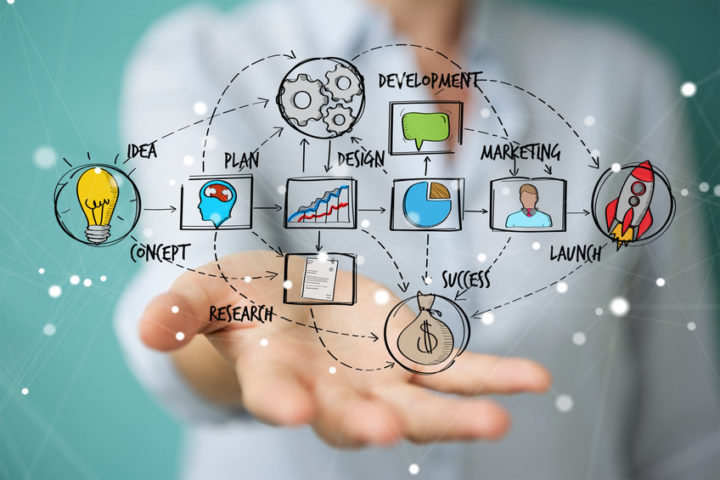
Executive buy-in is secured through collaborative workshops where cross-functional stakeholders align on goals and outcomes. Facilitated sessions (often 2-day planning workshops) help teams co-create strategic goals and commitments, followed by an executive presentation that clearly links the strategy to measurable business outcomes and ROI.
What quantitative analysis is included in the plan?
Quantitative analysis includes market sizing, customer journey mapping tied to revenue outcomes, competitive benchmarking, and resource driver modeling. The plan uses data to connect marketing activities to pipeline and revenue metrics, focusing on measurable impact rather than soft metrics.
What are the defined criteria for prioritizing initiatives to ensure high-impact goals?
Initiatives are prioritized using a structured framework that links objectives to measurable goals and KPIs, alongside a resource allocation matrix. This helps focus investment on activities that drive revenue impact, account growth, and measurable pipeline progression rather than activity for activity’s sake.
What is the estimated total time commitment for the engagement?
A strategic planning engagement typically takes three to five weeks, covering discovery, analysis, alignment workshops, and the delivery of strategic documents and frameworks. This timeframe includes preparation and collaborative sessions to ensure stakeholders are aligned and outcomes are actionable. The plan is designed as a living document and will be refined as new insights, data, and market conditions emerge.
What should be included in a B2B marketing strategic plan?
A complete B2B marketing strategic plan for growth-stage tech companies and B2B SaaS companies must be a living document—dynamic, consistently structured, connected to the customer journey, and measured by tangible business impact, not a static document that sits on a shelf. The plan should include market sizing, customer journey mapping tied to revenue outcomes, competitive benchmarking, and resource driver modeling that connects marketing activities to pipeline and revenue metrics, focusing on measurable impact rather than soft metrics. Initiatives are prioritized using a structured framework linking objectives to measurable goals and KPIs, alongside a resource allocation matrix focusing investment on activities that drive revenue impact, account growth, and measurable pipeline progression. The plan must be stress-tested against scenarios and competitive shifts, with structured frameworks (objectives, goals, measures, resource allocation) that anticipate competitive changes and build contingency thinking into the roadmap. Executive buy-in is secured through collaborative workshops (often 2-day planning workshops) where cross-functional stakeholders co-create strategic goals, followed by presentations linking strategy to measurable business outcomes and ROI. The plan is intentionally designed to be modified over time based on market shifts, competitive moves, regulatory changes, performance data, and evolving business priorities. You need to be nimble.