AI is everywhere…
Artificial intelligence (AI) has been invading our daily lives without us fully realizing it.
When you wake up in the morning, you may ask Alexa to give you a run-down of your daily schedule. That’s AI at work.
When you drive to work using Waze, the app is using a machine-learning algorithm to provide the best route for you. Hello, AI, again.
When you watch a movie or a show on Netflix or make a purchase on Amazon, the platforms use AI to make content or product recommendations for you. That’s definitely AI working hard for you.
Let’s think about this…
If Netflix can use AI to make content recommendations for us, businesses and enterprises can also use AI to make personalized content recommendations when prospects visit their websites.
If Siri or Alexa can answer and respond to your needs, businesses and enterprises can have their own versions of Siri or Alexa (Chatbots) that facilitate customer support or even greet you at a digital reception desk.
The use of AI in business is endless. The sky doesn’t even begin to describe the limit.
Watch this video where I discuss how to implement Artificial Intelligence into your marketing for your business | Tools & Strategy Pitch
Teach machines to learn (Machine Learning)
In the 2000s, the field of AI took a dramatic turn. (I’m talking acceleration up to eleven. You get the reference if you’re a fan of Spinal Tap. If you aren’t, YouTube it. You won’t regret it!).
AI is all about creating intelligent machines that work and react like humans, but what does that mean?
Why is a human intelligent? Simply put, it’s because we have the ability to learn and adapt. So, if we want machines to ‘think’ or ‘act’ like humans, why don’t we…teach them to learn?
Why didn’t we (and by we I mean smart computer nerds) think of that earlier!
Computer scientists started to write programs with general rules and algorithms so that machines could learn from themselves.
And how can we help them to learn?
Well, why don’t we feed them massive amounts of data so that they can start recognizing different patterns, such as muffins and dogs or fried chicken and dogs? (What is it with dogs and foods?)
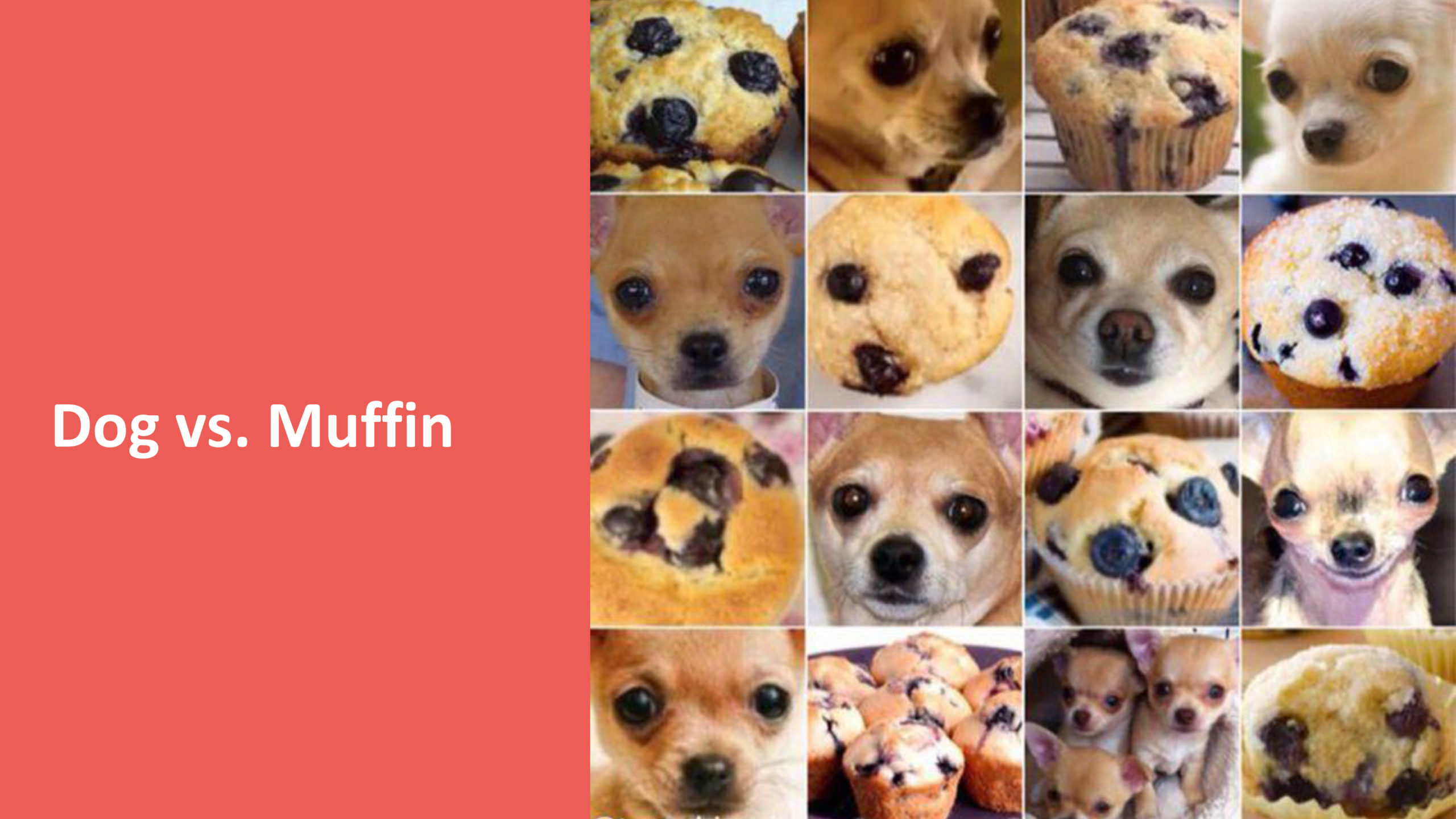
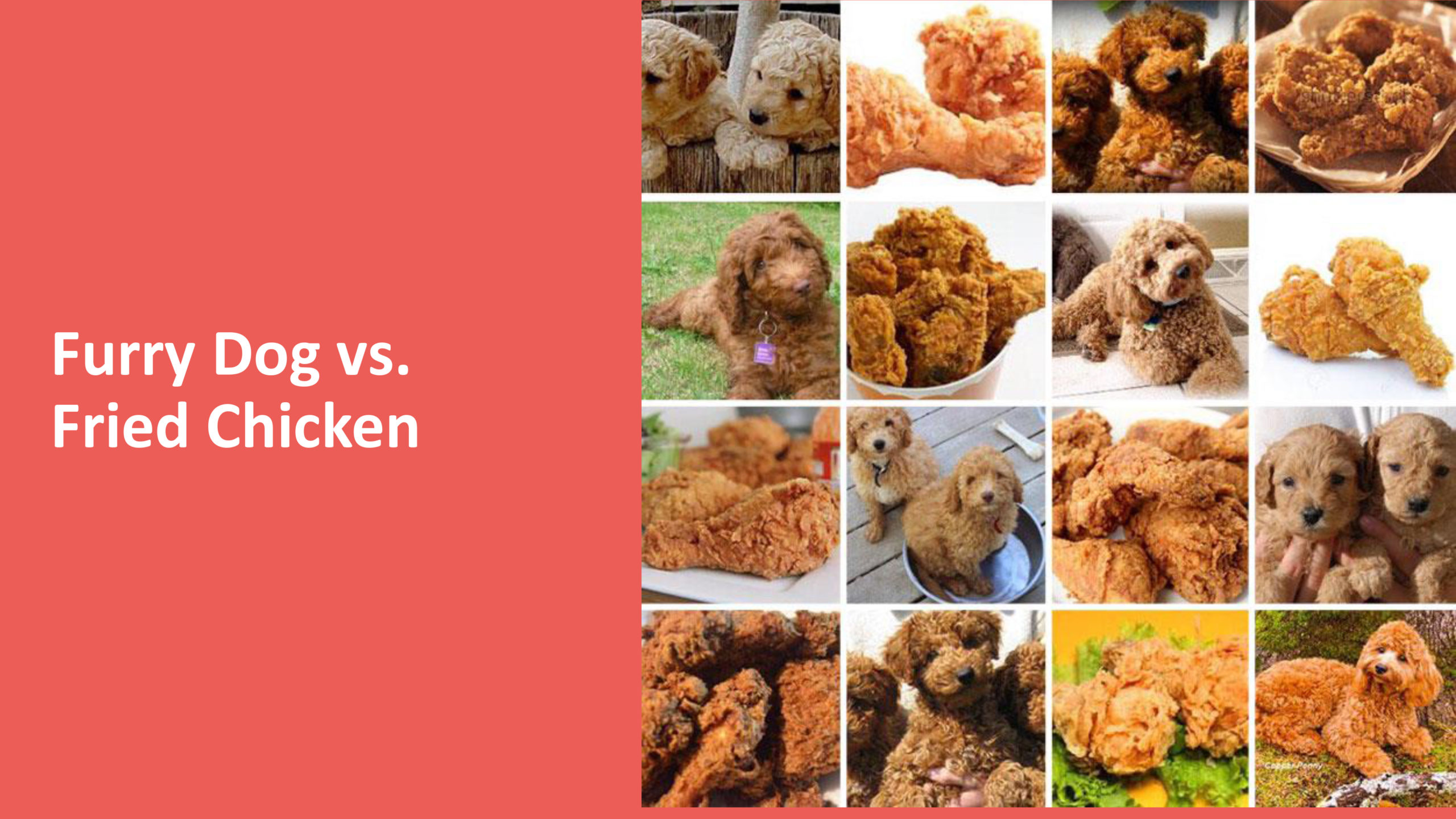
If we could train machines to differentiate muffins from dogs, we could also train them to perform more complex tasks, such as being able to recognize faces (aka facial recognition), interpret traffic lights (autonomous driving), decipher sentiments (decode texts to provide appropriate responses) and more.
And that’s exactly what we’ve (again, ‘we’ve’ meaning smart computer nerds) have done! There are so many things we can teach machines to do!
Here are the benefits of Artificial Intelligence in the context of marketing
One prerequisite of AI is that you need to take control of your data.
You need to know where your data is, how to pair that data (link common fields), how to fix the quality of the data, etc. If you have all the data in one place and have the ability to implement machine learning internally, the biggest contributions of AI for marketers are:
- Data analysis
- Task automation
- Personalized engagements
- Predictions and recommendations
If you run a marketing campaign, all the benefits can happen depending on which AI is used.
For email campaigns: AI can help “analyze” your subscriber database to segment your subscribers, “automate” when the campaign should go out and to whom, and “personalize” content for different subscribers.
It can also “predict” the propensity to buy based on content consumption and past engagements, and “recommend” the next email outreach content.
AI can play a variety of roles every step of the way throughout your marketing campaigns.
Here are the benefits of using AI in terms of marketing
Gain a Deeper Understanding of Your Customers
If you build a customer profile AI model which can learn from continuously fed data, it can provide you with a deeper knowledge of your customers and prospective clients.
Arming that with insights, you can plan your messaging for an optimal time (Can you imagine a day when marketers or machines know more about us than we do ourselves? Is that today?).
You can take it one step further and refine marketing campaigns to create highly personalize engagements, which is the next benefit.
Personalize engagements with your customers in real-time
With digital (in which everything is trackable) and select AI-based 3rd party tools (software with machine learning or deep learning capabilities built-in), marketers can know exactly what customers are doing in real-time (gentler and kinder stalkers).
This ability is boosted by social media usage when most posts are public or semi-public (are we sharing too much online?).
Third-Party tools can analyze customers’ posts and online conversations to help marketers understand their sentiments, desires, needs or even pains.
Savvy marketers can harness these AI-generated insights in real-time to quickly modify messaging or branding for maximum effectiveness (marketers will need to walk the thin line between being creepy and hyper-personalized).
Improve customer experience through journey mapping
A Customer Journey Map is a visualization of customer touchpoints within a product, service, company or brand through various channels during their purchase journey.
Different customers have different journey maps because there are many channels through which they can interact with brands. As a result, there are many (I mean many) possible Customer Journey Maps.
If we can feed customers’ touchpoints or engagement data to the customer journey map model, we can see how the individual or aggregate journey changes over time.
It’s like the Marauder’s Map from Harry Potter in which you can actually see every person’s movements as dots at Hogwarts. The Customer Journey Map may not be as cool as the Marauder’s Map, but it’s just as useful.
Again, with the right insights, you can further enhance your customer experience on your owned, earned and paid media outreach.
This is especially beneficial to optimize owned platforms, such as your physical store layout, website journey and site map, virtual user-based community design and content management, and customer service journey design.
Optimize sales journey by accounts
The hot topic in B2B marketing in recent years has been Account-Based Marketing (ABM).
Although the sales stage looks very linear from prospecting, qualifying and demoing to negotiating and closure, we all know that account-specific sales is a ‘one step forward and two steps back process, just like potty-training.
For target accounts, most salespeople have some sort of game plan (they always say they do, anyway), but AI can provide additional information about specific individuals’ behaviors, sentiments, content consumptions and more, all of which offer additional insights to help refine salespeople’s game plan.
Before you can reap the benefits, you need to…
A key takeaway you’ll want to consider is that, while AI can provide value on many fronts, it’s not about benefits.
It’s about what questions or concerns you want AI to address, how to apply AI within a company or organization, and what types of data you should use to harness AI.
Here are some examples of questions you can ask to determine what tools and data to use:
- Based on our account history and payment transaction data, what do the top 25 new accounts look like? What is the average transaction size? How does that compare with sales’ own top 25 account list? Are they similar or different, and why?
- With our existing lead scoring, what minimal score do prospects usually reach in order to get them to request a demo? With that score recommendation, what is the average success rate of closing a deal?
- Which marketing channels drive the highest quality MQLs (Marketing Qualified Leads)? How much money can I allocate to that channel to see an improved rate of return?
Make an effort to understand what you want to accomplish first before you dive into data and model-building.
In Summary…
To me, the biggest benefits of AI for marketers lie in personalization and recommendations. We all know how to do mass communications. For the next era of marketing, though, AI holds the key to providing insights and recommendations to do even more effective mass customization.
To know more about Artificial Intelligence in Marketing, check out the short and fun eBook, The Modern AI Marketer.
If you prefer to listen I suggest you check out some of my B2B marketing & More podcast episodes about Artificial Intelligence in Marketing.
How to Implement AI in Your Company
Why AI is Important to Your Marketing
The Impact of Artificial Intelligence on Content Marketing

What can Pam Didner do for you?
Being in the corporate world for 20+ years and having held various positions from accounting and supply chain management, and marketing to sales enablement, she knows how corporations work. She can make you and your team a rock star by identifying areas to shine and do better. She does that through private coaching, keynote speaking, workshop training, and hands-on consulting. Contact her or find her on LinkedIn and Twitter. A quick note: Check out her new 90-Day Revenue Reboot, if you are struggling with marketing.