
Artificial intelligence, AI is a tech concept lying in the foundation of any intelligent piece of hardware and software. In other words, a global task of AI is to make computers understand and interact with users by the principles of human intelligence. And these principles aren’t limited to the likes of biological processes of memorizing info and making decisions.

Despite the main focus of implementing artificial intelligence on the science sector, companies all over the world tend to employ AI to optimize routine workflow processes and such. For one thing, you can significantly accelerate data processing and prediction. In particular, we’d like to discuss the place of artificial intelligence in marketing and sales in this article.
What is Artificial Intelligence (AI)?
Let’s start with a brief introduction to the artificial intelligence concept as it is.
What is artificial intelligence exactly? Similarly to the way neural networks are among the essential machine learning concepts, the whole concept of ML is a form of AI. I.e., artificial intelligence is something global. It describes a field of development of intelligent computer systems with the capabilities identical to the human brain’s. It’s about understanding of languages as well as an ability to learn, to make decisions, think and solve issues, etc.
As the niche grows, more and more advanced AI-based solutions appear on the market. Most prominent among them are capable of handling tasks in a way a logically-thinking, competent human expert would.
How Does Artificial Intelligence (AI) Work?
As you may have already understood, AI products are based on artificial neural networks (ANN). But how does AI work exactly? Let’s figure this one out.
Neural networks are, basically, mathematical models that operate according to the same algorithms natural neural networks in the human brain go by. Thus, they are able to autonomously generate and analyze non-linear dependencies between input and output signals, adapting to the new types of information. Note that this adaptiveness is provided due to special self- and partially-self-learning algorithms that employ input data and strive to optimize the results after processing the data.
There are several metrics for defining the efficiency of ANN performance.
Not only the quality (preciseness) of the end results matter. Thus, such efficiency indicators as the speed of task handling, the volume of memory consumed, and dispersion of analyzed types of data are important in the modern business realities.
In terms of implementation, ANNs consist of several neural layers – separate computing nodes, each of which enables the following three operations:
а) the network gets input data;
- b) applies a certain math function to it in order to define whether the data should be transferred further;
с) if the outcome of it is positive, it passes the data on for further processing.
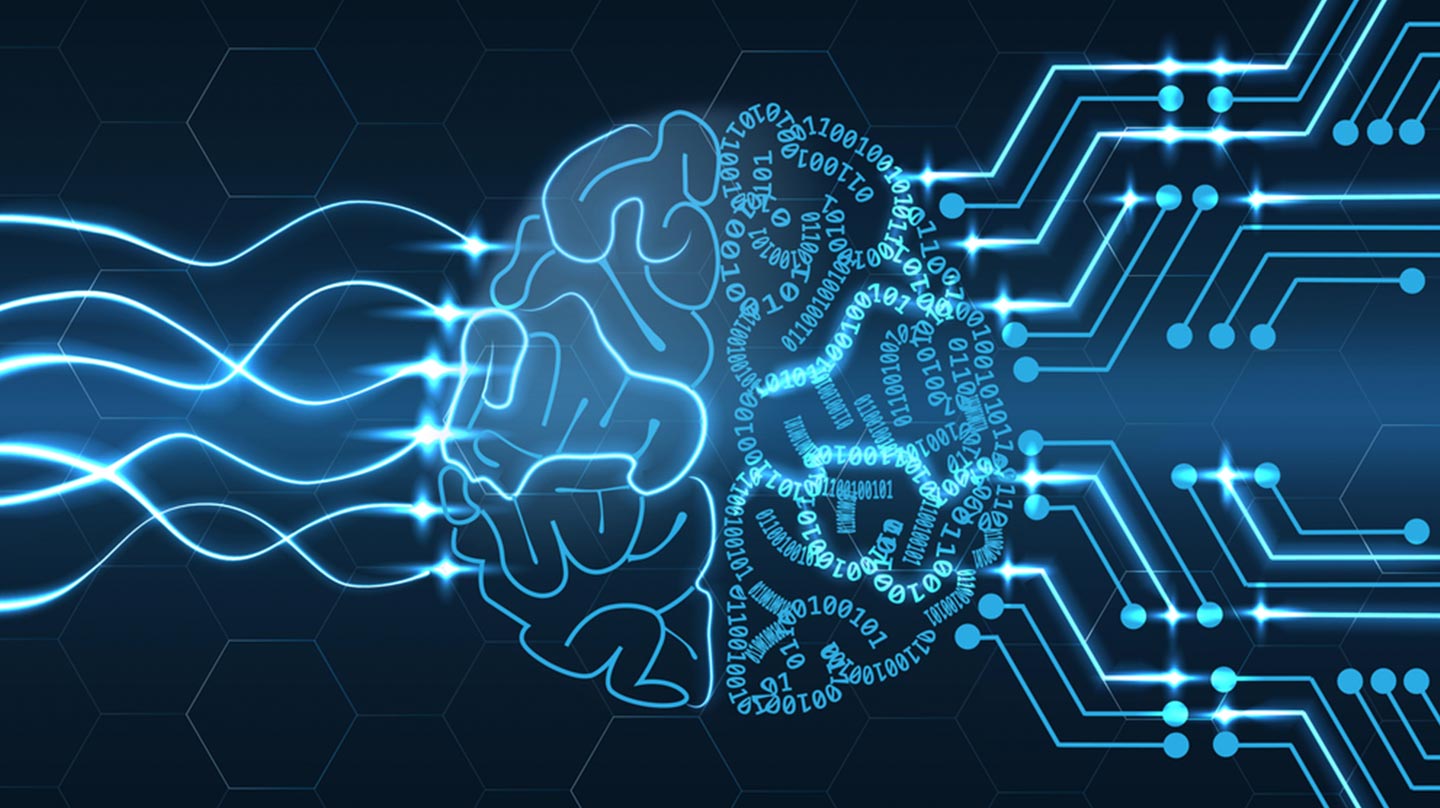
The simplest implementation of ANN is a three-layered network of neurons with:
- First layer processing absolutely all input data;
- Second, hidden, layer filters the data according to the final result requirements;
- The third layer selects the most optimal option that a user gets in the end.
In more complex models, there can be many more intermediary (hidden) neural layers. Along with that, the task-solving potential grows. It may also happen so that the selected model appears to be overly-voluminous for the task at hand as well, in which case overfitting takes place.
What are the Benefits of Artificial Intelligence (AI)?
Moving on through the discussion of our article’s subject, let’s also consider the ultimate benefits of artificial intelligence.
Autonomous decision-making
The main advantages of AI start with an ability to individually make decisions, without a human involved. This allows to cease dedicating much of human resources to solving certain tasks. This is a very beneficial moment for company scaling when the scope of tasks gets significantly expanded and the need to hire new employees appears. In the case of implementing the AI software, companies manage to save a lot on workplace organization, regular compensations, and even taxes.
Relative cost-efficiency
Artificial intelligence software is utterly multipurpose in nature. I.e., it was created especially to cover a wide range of expertise categories and to apply it in the proper direction. Due to that, the self-cost of exploiting such software is quite affordable (as opposed to hiring live employees and deploying separate software iterations for every new type of task).
Accessible development
Despite the technical complexity of neural networks, AI-based solutions are pretty simple to develop. All due to the availability of profiled frameworks, such as TensorFlow, Microsoft Azure ML, KAI, Google Cloud Prediction API, and others. Programmers have to only build business logics of the future product while neural connections are built up by default.
What are the Risks Involved With Artificial Intelligence (AI)?
Despite some obvious advantages of AI-based solutions, there is also a flip side to this moment. So, what are the risks of Artificial intelligence implementations?
Occasional lack of preciseness
We all remember a funny case of AI being unable to distinguish cute chihuahua muzzles from regular cupcakes. It was a pretty insignificant failure in that case. However, in certain situations, for instance, in the employment of computer vision for illness diagnostics on initial stages, such inaccuracies can cost someone’s good state of health or even life. So this is one of the crucial risks of AI to pay attention to.
Replacement of human resources
According to the expert prognosis, 16 specializations are to disappear in the nearest 20 years due to the advancement of AI-based solutions. This spawns lots of risks of increasing unemployment rates. On the other hand, many experts believe that the choice of AI will allow organizations to forget about non-productive employees and decrease human factor-related risks. Moreover, the extinction of a number of professions can lead to some new Artificial intelligence jobs, which will be closely interconnected with the implementation and use of AI-based solutions.
Lack of security guarantees
As much as they are cool and progressive, companies should take AI-based products that are intended to make decisions autonomously with caution. If the basic software mechanism isn’t perfected enough, the end result of its operation may lead to not only additional expenses, but also to some personal harm (like autopilot system failures).
What Are Some Examples of Artificial Intelligence (AI)?
Here’s a number of the most renowned and technologically-advanced examples of artificial intelligence in the market.

Amazon
We couldn’t help but start our list of great artificial intelligence examples with Amazon’s AI capacities. Thus, the company has been employing AI-powered algorithms for a long time now, optimizing all stages of sales funnel in the marketplace. Especially impressive is the fact that in the last couple of years, the tool could foresee user behavior with such quality that it boosts sales every year with a rapid speed. And it only needs users’ history of online requests to operate.
Netflix
Netflix employs technology similar to Amazon’s, which offers potentially interesting flicks to users based on their history and behavior on the website. In particular, the platform analyzes user requests and ratings. Gradually, the system starts offering more and more fitting options for particular users. The Netflix AI feature has but one significant drawback, though. Movies that haven’t yet had the time to earn high user rating won’t usually be recommended under any circumstances.
Nest
Interactive thermostat Nest is a relatively fresh startup that was purchased by Google in the first part of 2014. Its operation is based on the analysis of residents’ behavioral algorithms. It studies the habits and preferences in terms of the inside space temperature. Then, it automatically adjusts the best temperature for certain users. Nest can even be managed via Alexa.
Alexa
Yet another prominent Amazon’s project, Alexa can be deemed a smarter, more advanced alternative to Siri and products alike. Indeed, with its impressive ability to recognize and decrypt human speech from any point in space, the solution is among the smartest virtual assistants out there. Thus, with its help, you can look up info and shop online, schedule meetings, monitor the security of your home, etc. In the USA, Alexa is actively employed by disabled people, making their lives much easier.
Tesla
Tesla is an advanced smart car with autopilot capacities that is already considered by many as one of the best vehicles on Earth ever created. And it’s not all about the futuristic design and hype around Elon Musk’s name. The car can boast truly impressive forecasting capabilities, unique autopilot technology, and general technological finesse.
da Vinci & other diagnostics & surgery solutions
Last but not least, da Vinci is yet another vivid example of implementing artificial intelligence robots that are able to handle complex, utterly cumbersome operations. AI is already commonly employed in various medical centers of the world. It does wonders at diagnosing diseases. John Radcliffe hospitals’ researchers from Oxford developed a diagnostics system that is better at indicating heart diseases than experienced doctors in 80% of the cases.
At Harvard University, scientists taught an Artificial intelligence robot microscope to resolve dangerous blood infections. On top of all that, modern AI is faster and much better at diagnosing breast cancer as opposed to radiologists. As a whole, we can safely say that science and medicine, in most part, define the future of AI for the nearest decade.
What Are Some Notable Artificial Intelligence Companies?
Among the most prominent companies that fruitfully employ AI capacities, we’d point out such market tycoons as Google with its Google Cloud Prediction API, Microsoft with Microsoft Azure ML, IBM Watson, Amazon with AWS Machine Learning, and Apple with Core ML.
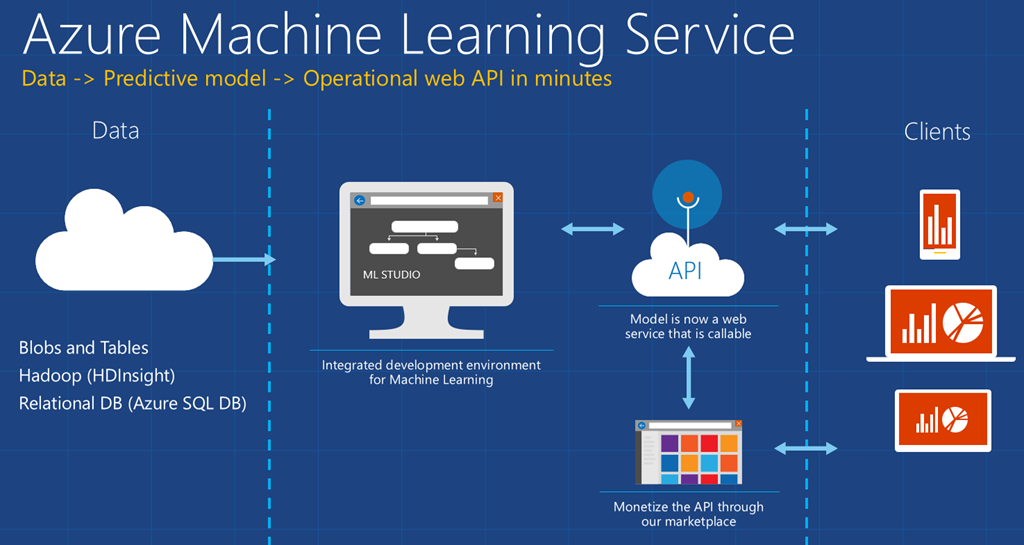
They managed to create unique in their capabilities platforms and APIs that are used by developers all over the world.
What is the Difference Between Artificial Intelligence (AI) & Machine Learning?
And now, for a couple of words about the principal difference between artificial intelligence and machine learning.
AI is quite an expansive and maybe even vague concept that initially appeared back in 1956. In particular, that year, Dartmouth held a science conference where the idea was first described. It sounded approximately like this – “Artificial intelligence should allow machines to mimic any self-learning aspects and other human intelligence peculiarities (memorization, decision-making, prediction-making, etc.)”.
Formally, AI capacities can be beneficially enclosed in everything from video games to disease diagnostics tools to virtual assisting solutions like Siri and more.
As for machine learning, it is an essential part of AI. So it isn’t fully reasonable to consider machine learning vs artificial intelligence as opposing concepts. Thus, machine learning is based on the computer receiving volumes of data, from which it learns. Sometimes, they can flow in from various sources in colossal volumes, in real time, and unstructured. This is where Big Data comes into play, but that’s a different story.
ML systems allow rapidly putting to use the knowledge acquired during learning from large sets of data. This enables them to excel at such tasks as face, speech, and object recognition, translation, and many more. As opposed to solutions with manually coded algorithms, solutions based on machine learning and artificial intelligence learn to individually define templates and make forecasts.
How Sales & Marketing Can Leverage Artificial Intelligence: 7 Instances
To finish up our overview, here are the seven particular cases of efficiently employing AI in sales and marketing.
- Automation, Self Serve, Chatbots. Instead of having to contact human salespeople, nowadays, many prefer to use self serve counters (first introduced in Japan). Most people prefer to order products online and turn to chatbots to figure out any service nuances at any moment. In the near future of humans, retail service may be practically completely replaced by robots and AI applications (B2B sales should expect a similar situation, but later).
1. Customer Service Enhancement.
Any experienced marketing specialist would tell you that the felt enhancement of customer service is quite a challenging task. It’s not easy to perfect this aspect when market leaders provide some impeccable services globally. Nonetheless, even a small business can afford to employ various AI solutions for relationship marketing. Such solutions thoroughly analyze behavioral traits of individual customers and generate unique and truly engaging product and service offers based on that info.
2. Predictive Lead Scoring & Analytics.
Gathering of analytics via AI-powered marketing tools is an utterly efficient marketing concept. All the data can autonomously be collected, sorted, and provided for a marketing analyst in convenient graphs or diagrams for further business prognosis. This is a much more rational approach than the manual collection of marketing analytics and data processing.
3. Scalability & Omnipresence.
What can allow companies to scale without excessive costs and facilitate sales team management better than AI solutions? We’ve already mentioned this benefit: implementing AI-based software, the need in a number of human-occupied positions disappears. Even global business expansion won’t cause any dramatic budget losses. The same goes for omnipresence – you can establish centralized management for all subsidiary companies using smart management software (for instance, Salesforce marketing cloud).
4. Customer Journey Mapping.
As you may know, Customer Journey Map is a visualization of the history of consumer’s interaction with a product, service, company or brand through various channels at a certain time. The customer journey can be reflected via a graph where points of product interactions are defined and customer’s actions are described – their feelings and possible issues. CJM allows objectively analyzing the product interaction experience from the customer perspective, define and eliminate appearing obstacles, offering recommendations on enhancing the product. This is a must-have tool if you strive to satisfy your audience’s demands. Check out this Forbes article for more detail.
5. Enhance Customer Service Performance.
As much as your in-house sales team workflow can be well-adjusted, when there are sudden spikes in the number of orders, it becomes easy to get confused. To minimize such risks, you can employ the specialized AI-powered software (there are loads of different CRMs for this matter).
6. Save Time & Resources.
Any solution that automates a certain set of tasks can save your employees’ time. Such software is usually, assigned with the responsibility for quite routine and uninteresting tasks that were previously handled by the inside sales team. AI-based rational distribution of responsibilities will surely boost your sales team motivation.
Summary

As you can see, artificial intelligence is not just another stale programmers’ offspring. It is rather a full-blown technological concept that allows solving and optimizing the widest scope of various tasks. Tesla, with its convenient autopilot, has already saved the life of a drunk driver, which says a lot.
AI can be beneficially implemented in marketing and sales as well. If you wish to deploy something similar to what we described in the article, contact us! We’ll build you truly reliable, highly-efficient solution based on artificial intelligence.
If you want to continue reading about sales, marketing, and artificial intelligence check out some of the previous articles:
3 Ways to Evaluate AI to Optimize Your Marketing
Artificial Intelligence in B2B Marketing: Things you need to know

What can Pam Didner do for you?
Being in the corporate world for 20+ years and having held various positions from accounting and supply chain management, and marketing to sales enablement, she knows how corporations work. She can make you and your team a rock star by identifying areas to shine and do better. She does that through private coaching, keynote speaking, workshop training, and hands-on consulting. Contact her or find her on LinkedIn and Twitter. A quick note: Check out her new 90-Day Revenue Reboot, if you are struggling with marketing.